We just completed our three week adventure from Connecticut to Wyoming and back. Overall, the journey was fantastic but we were bothered by a few things. I’ll be detailing bad roads, what havoc they can wreak on your coach and the results of a poorly designed water tank mount.
Our coach is a 2013 Jayco Greyhawk 31DS, so it’s a pretty large Class C motorhome built on the Ford E450 Super Duty chassis. Jayco extended the chassis to 32 feet and added Helwig helper springs in the rear to improve handling. All this mass comes in at roughly 14,500 pounds and when traversing our interstates each state seems to keep these roads in various stages of ‘goodness’. Pennsylvania is doing a pretty good job fixing up 84, 81, 76 and several other interstates. Minnesota roads just plain suck! Every road to bridge interface seemed to cause a huge impact on the coach. Traveling further west some state roads in Minnesota and South Dakota were nothing more than dirt roads that were grated perhaps at the beginning of spring, so these roads were like a washboard.
These less than perfect roads made the riding experience in our coach a noisy one with lots of stuff rattling around. Each time we stopped cabinet doors were open even though we had secured them. When we opened the cabinets we were greeted with items flying out of the cupboards which generally caused us to yell out “what the f…” We did get used to the noise, or at least I did. I recall at one point mentioning “gee, did the coach get quieter?”
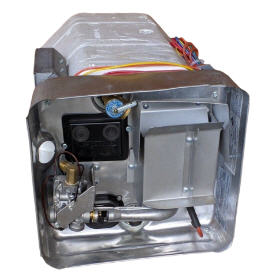
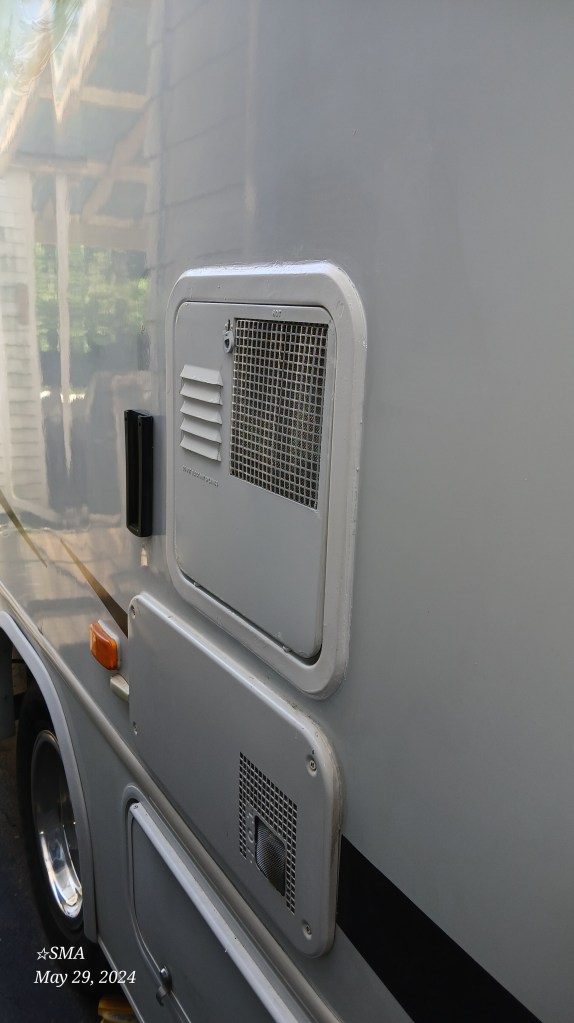
Our coach came stock with an instant water heater when manufactured. A previous owner didn’t like the performance of the water heater so they replaced that unit with a Suburban 6-gallon propane/electric water heater. That owner purchased the water heater and took the coach and water heater to a local Connecticut RV place to have it retrofitted into the coach. That RV place used either the stock mount or made a 3/8″ plywood to mount the water heater. This mount was secured to the coach exterior wall with two #10 wood screws and the rear of the mount (basically a shelf) was propped up with a 3/8″ plywood wall stapled to the shelf and screwed to the floor.
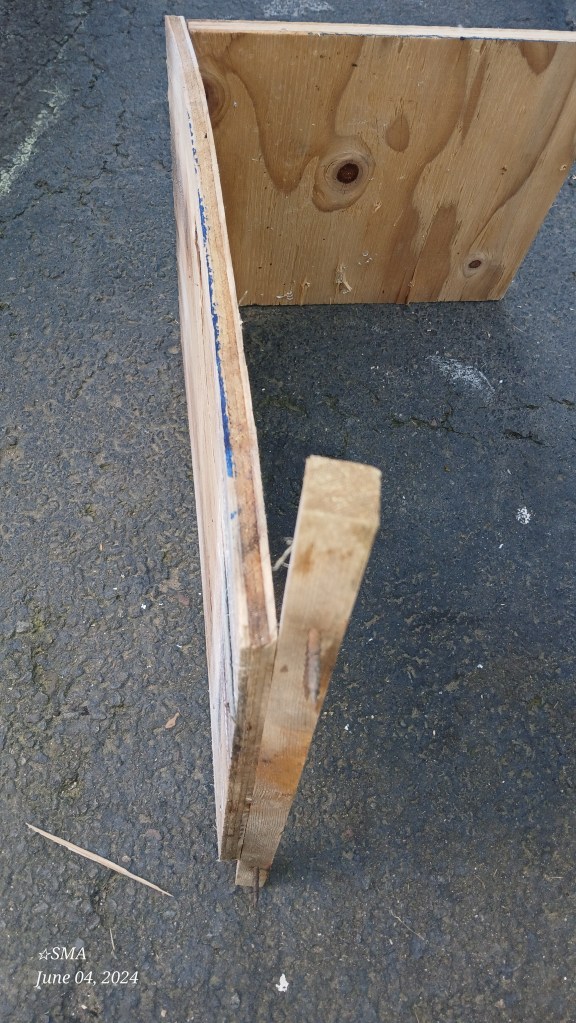
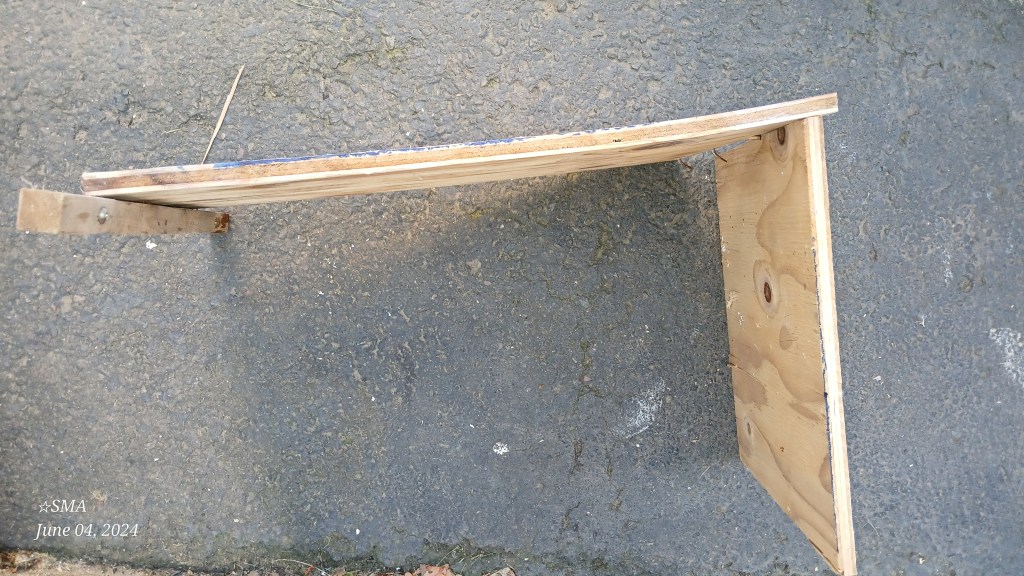
When we took ownership of the coach about 8 months ago I was suspect of this water heater shelf. The water heater was not secured to the shelf, so just the weight of the water heater kept the unit in place. We noticed a few weeks into our journey that the flush mount Suburban flange on the exterior wall of the coach was separating from the coach. Obviously something was up with the water heater mount.
We managed to make it back home to Connecticut without incident and I proceeded to investigate was was happening to the mount. Apparently all the bad roads and time took it’s toll on the two #10 wood screws; they pulled free from the exterior wall and the water heater partially collapse. Doing a bit of math, the when the water heater is full of water the tank and water in the the tank weigh in at nearly 90 pounds. All that weight, not secured to the shelf and held secure by only two wood screws just was a bad design.
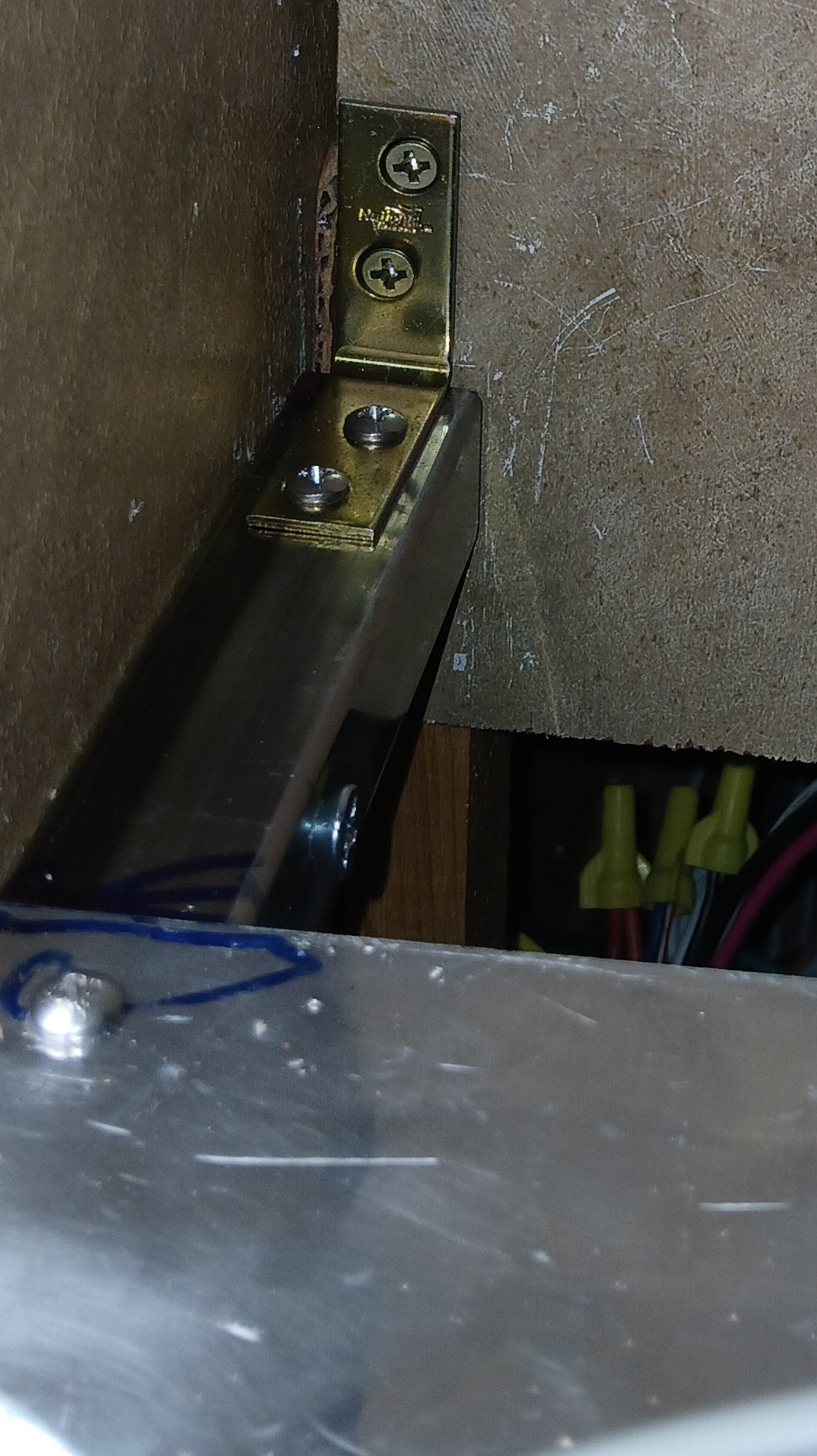
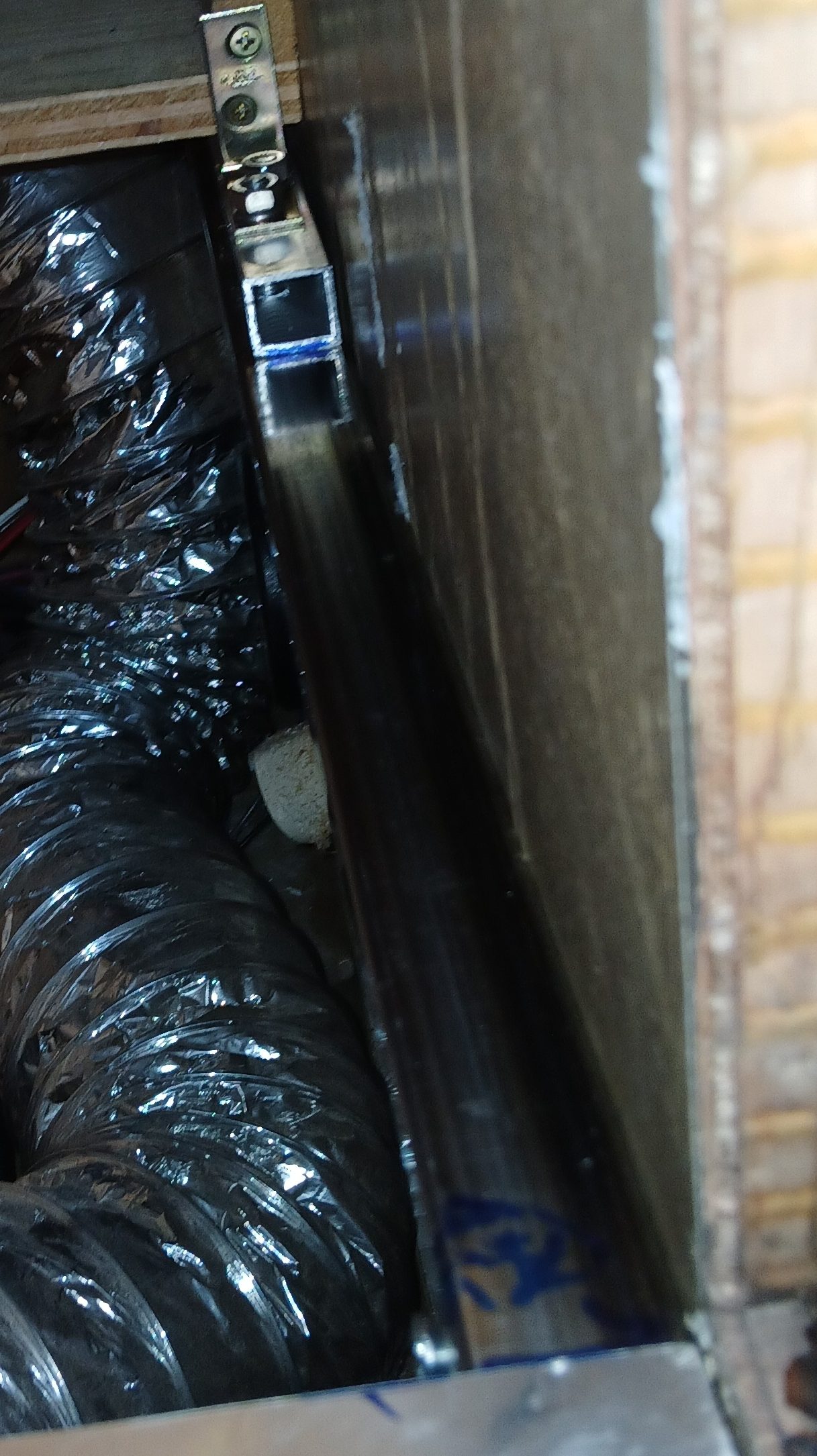
I purchase a 4 foot length of 1-inch square steel stock which I attached to the interior side of the coach exterior wall. This steel stock is now held in place with 5 large lag bolts that are 2 1/2 inches long (the coach wall including the 1-inch square steel stock is 3 inches thick), so now there will be some meat holding the front side of the water heater in place. A 1/4 inch thick diamond aluminum plate makes up the shelf that the water heater resided on now. The front of the plate is attached to the 1-inch square steel stock with 3 1/4-20 stainless steel bolts. The rear of this aluminum plate is attached to 1 inch square aluminum stock as feet, these feet extend 12 inches to the coach floor where they are attached to a 2 x 2 inch wood block and screwed in place to the floor.
The entire build was fairly expensive, just the aluminum plate was $25.
With hardware, steel and aluminum stock and brackets the entire build was about $100. The build process took two days and each piece was custom cut and fit in place. Finally two large holes were drilled into the edge of the aluminum plate which is where a 1/2 inch wide industrial ty-wrap is used to secure the water heater to the shelf.
 Coachella
Leave a comment